
The is the first of the prairies where we’ve planted into “old field” vegetation. It’s an experiment, but since all these experiments are in slow motion, we’ll continue to plant a few more, while we wait to see if this one works.
We have 5 large areas – 5-10 acres each – that used to be farmed or hayed, but were abandoned years ago. Now that we’ve finished planting all the cropped areas, I decided we should tackle these old fields – to see if we can get them to be more diverse, with more native vegetation. Upper East Center Valley is the first try at this.
The lower half of East Center Valley was one of the fields we planted the first year – the winter of 2000/2001. But we left the upper half to deal with later.
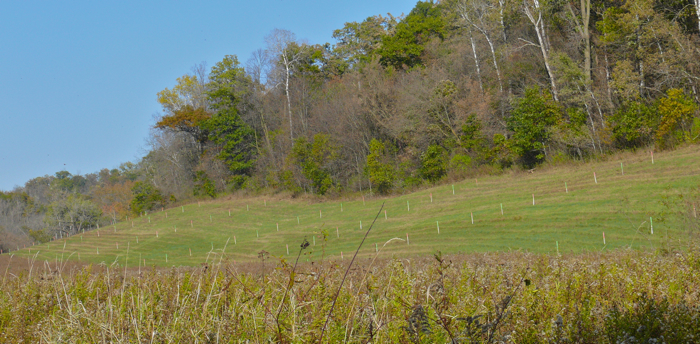
The upper half of East Center Valley is about 8 acres, and has typical old field vegetation: Smooth Brome (Bromus intermis), Canada Goldenrod (Solidago canadensis), Black Raspberries (Rubus occidentalis ), and Queen Anne’s Lace (Daucus carota). It’s a long thin strip of land, on a steep west-facing slope, running along the edge of a woods. This photo was taken in 2007, and shows both the upper and lower fields. (The planted prairie in the lower field was 7 years old.)

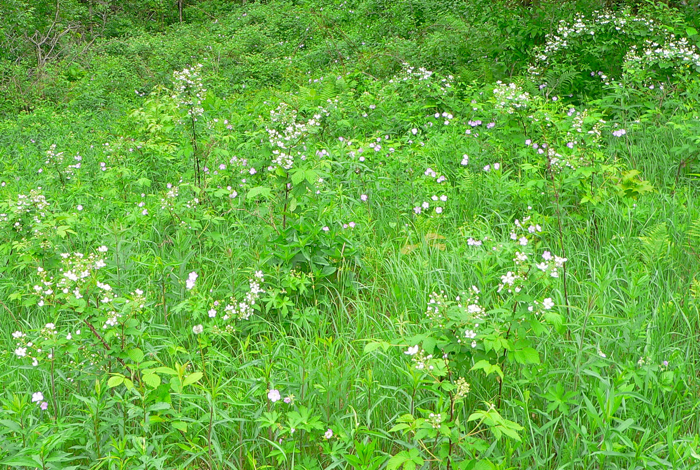
The field does have some desirable natives: Asters, Giant St. John’s Wort (Hypericum pyramidatum), Wild Geranium (Geranium maculatum), and Violets.
Here are Wild Geranium and Black Raspberries at the edge of the woods.

This photo shows the upper field on the right, and the lower field – planted in prairie – on the left.
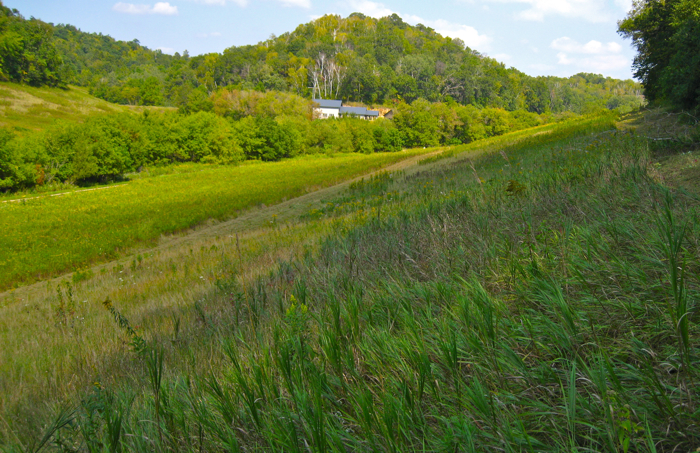
Because the field is so steep, we can’t do much work with machinery except mowing. Neighbors have told us that several people rolled tractors while trying to farm it, so we’ve been very cautious about bringing big equipment up there. We’ve mowed it a few times – stimulating large blooms of Queen Anne’s Lace – and otherwise, left it alone.
I’d like to preserve the natives that are there already – especially the violets. Violets are very difficult to introduce into planted prairies – their seeds are small, difficult to collect, and expensive to buy. Violets are especially good to have because they are the host plants for Fritillary butterfly caterpillars.
So, I’m going to try sowing prairie seed directly into the vegetation that’s already there. I’ve chosen sturdy, aggressive plants that I hope will compete successfully with the weedy old-field vegetation.
We mowed the field in the fall of 2009, planted seeds into the snow in January and February of 2010, and we’ll mow it all summer in 2010, and possibly again in 2011. Then, in the summer of 2011 or 2012, we’ll see if any of this works.
This was taken while Mike was mowing at the end of the summer, 2009.

Another view of the mowing

Late in the fall I staked the field.
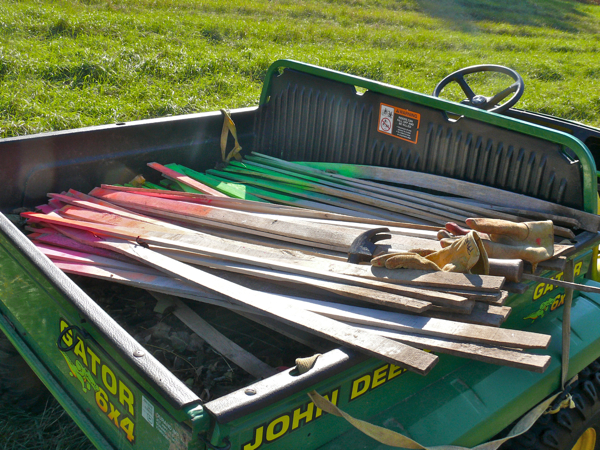
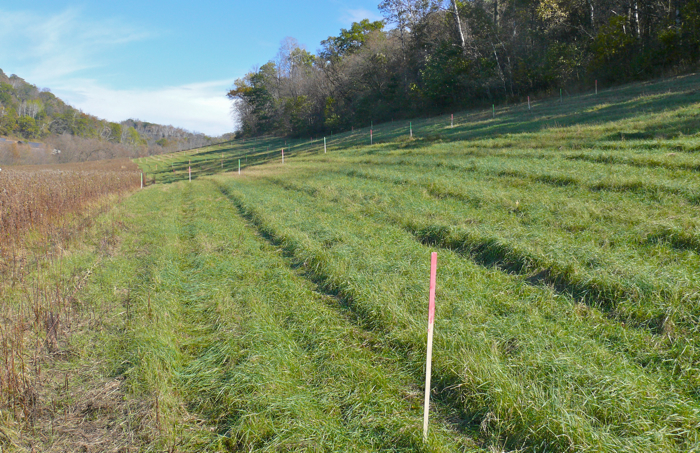
Here’s the field, ready for planting.
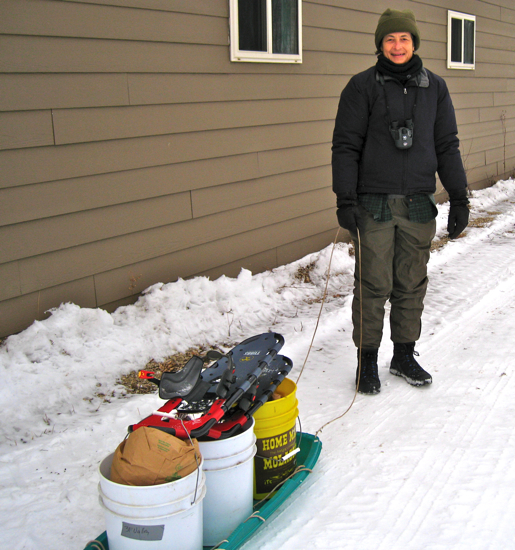
Once there was snow on the ground, I started planting. Because the field is in a narrow part of the valley, it acts as a wind corridor, so it was often too windy to plant, or the surface of the snow was too slick for the seeds to stick.
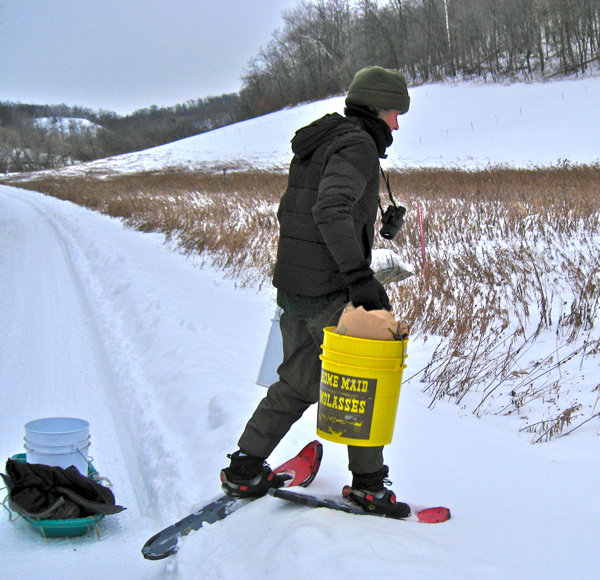
I carried buckets of seeds and my snowshoes to the field on a sled.
Then I headed across the already planted lower field, to the upper part, for planting.
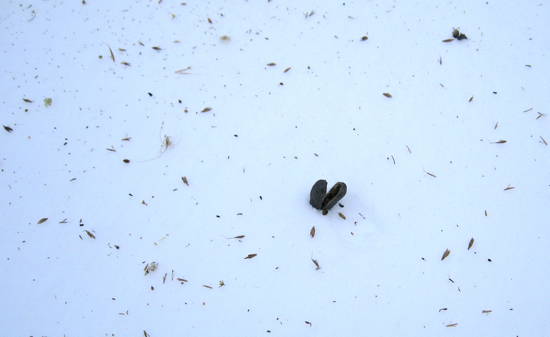
Some of the seeds in the snow
View of some of the planted sections
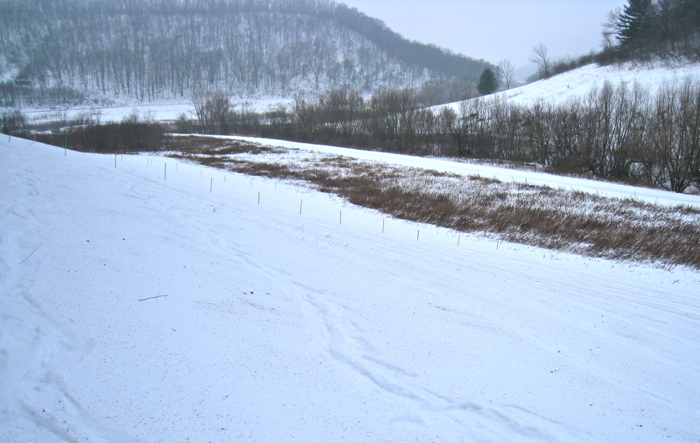
Looking toward the house, across the sections that hadn’t been planted yet
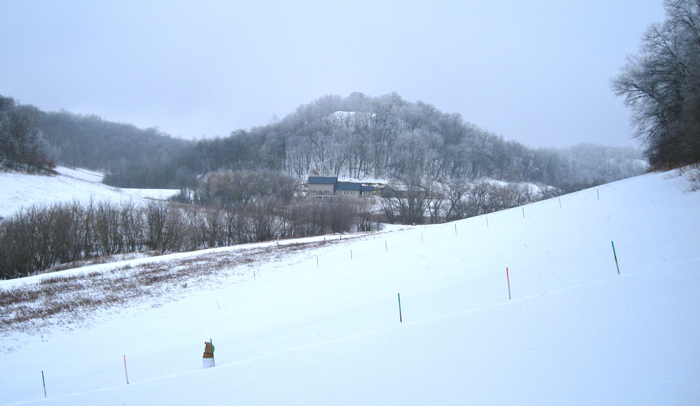
I finished planting at the beginning of February, 2010.
The following summer we kept it mowed, to give the new prairie seedlings a chance to get some sunlight.
4/18/2010
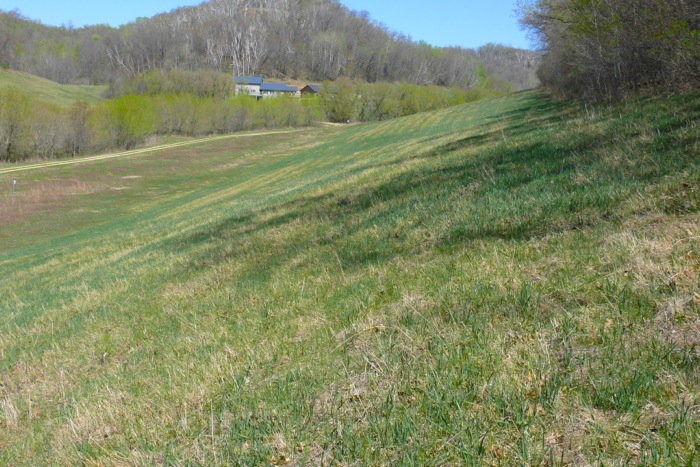
The brome grass still grew very thickly, and I was concerned that the prairie plants might not be able to get through that thick mat of grass. So I tried an experiment. I sprayed several small areas with roundup early the next spring – hoping I could kill the early, cool season grasses, but not harm the natives.
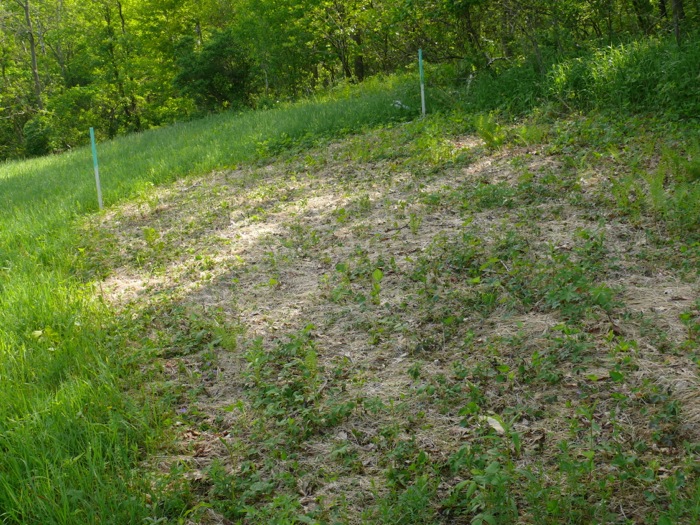
5/28/2011 Later that spring it was clear that the spraying did kill the grass, and there were many natives coming up through the dead thatch.
So we decided to have someone come in and spray the whole field with roundup. The best time to do that seemed to be in the late fall – when we hoped most of the natives would have gone dormant, but the cool season grasses would still be growing.
10/3/2011 One of the folks from Countryside Farm Coop did the spraying, with a huge machine that did nearly the whole width of the prairie in one pass. (Here are a few more photos of the spraying.)
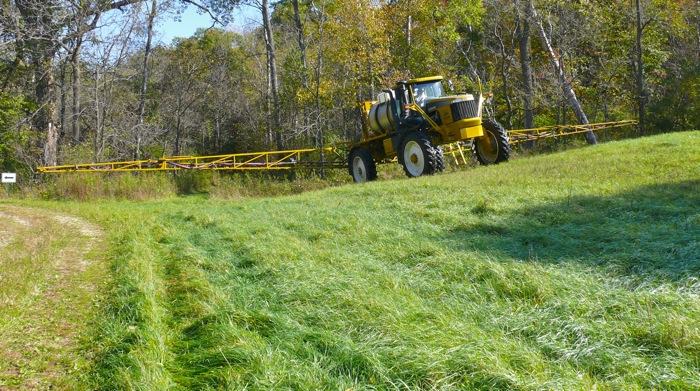
10/3/2011
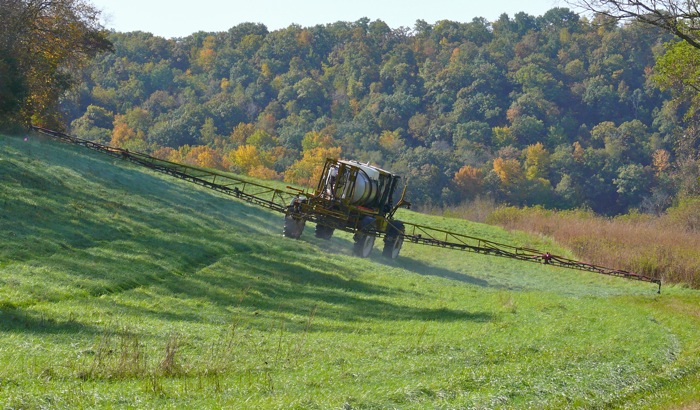
The only trouble he had was on the steepest part of the hill. He had to come down quickly to keep from rolling, but he got down safely, and only made a few ruts in the dirt. Later in the winter I reseeded the ruts with prairie seeds.